Boudinet's Curtain
Duration: 00:26:54; Aspect Ratio: 1.778:1; Hue: 9.765; Saturation: 0.058; Lightness: 0.303; Volume: 0.150; Cuts per Minute: 14.349; Words per Minute: 119.401
Summary: Roland Barthes in his seminal book 'La Chambre Claire' finds the essence of photography in its puncture of time. The past comes alive and confronts us like a sensuous being. The photograph serves as an index of intractable reality, an authenticating evidence of time, a testimony of truth. But whose sense of time and truth does a photograph index? In my project, ‘Queer Childhoods’, conversations and interviews with queer individuals about their childhood photographs makes clear that imbricated in the ‘record’ of childhood photographs are embedded silences and ghostly spectres of uncaptured subjectivities. Imaginaries that you cannot see but can only listen to.
In the frontispiece of Barthes’ book is a photograph by Daniel Boudinet, simply titled 'Polaroïd, 1979'. In the image, through the diaphaneity of the curtain, appears the soft edges of a bed and a cushion in a barely visible room. In this work, I draw these curtains as the symbolic surface for the photograph. Behind the facade of Boudinet’s curtain lies domesticity with its soft-edged clarity mired in darkness. How do we enter this domestic space of photography? Does the image lie beyond the photograph and can a voice enter an image? Is it possible to listen to a photograph?
____________________________________________________________________________________________________________________________________________________________________________________
The work was financially supported through a seed grant by Sanbox Collective and Goethe-Institut/ Max Mueller Bhavan Bangalore and first shown as a photographic performance at Gender-Bender Festival 2024.

In his book ‘La Chambre Claire’,

Roland Barthes searches for the presence of his dead mother in old family albums.
In finding her, he also claims to find the essence of photography.

The truth of her presence coincides with the truth of the image.
The photograph becomes alive and wounds him like a puncture in time.
The finality of death can only be undone in a photograph.

I wonder if unable to bear the truth of her death,

Barthes finds her resurrection in the infallible truth
of her image.

Yet is it purely a truth that he finds?

Or a way to mourn by inhabiting a lost familiarity?

He does not show us the photograph,
for this domesticity of familial love and recognition is visible
only for him to see.
And perhaps, the truth as well…

In the beginning of the book,
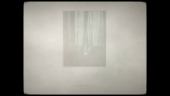
next to the title page, comes this image by Daniel Boudinet.
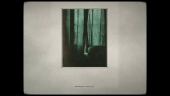
In this image, through the diaphaneity of curtains, only a little light can enter.
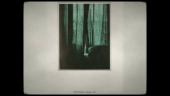
We see a barely visible room
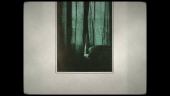
and can make out only the soft contours of a bed and a cushion.
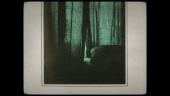
A critic notes that this image stands in symbolically
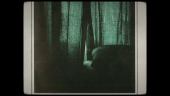
for the photograph Barthes cannot show us.
It becomes an allegory of absence-presence
and the impenetrable facade of domesticity.
Is it possible to see through this image?

To draw its curtains and enter the domestic space of photography?
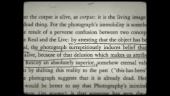
To seek the truth of the image and ask -
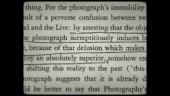
Where does it lie?

Is it already there in a pure form inside the image for us to see?

Or does it lie somewhere beyond?

Maybe not for us to see but to hear,
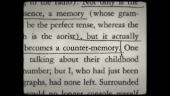
to listen to…

Maybe not in the images that

but voices that speak!

Looking at our own photographs in family albums,
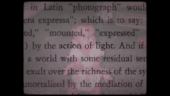
I wonder
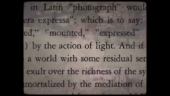
if it is always us who inhabit the images,
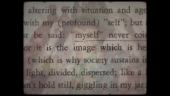
or, can the images inhabit us too?

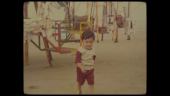
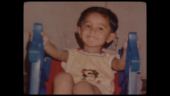
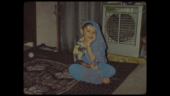
This is a picture of me when I was four, school.

I was in Uttarakhand at that time

and I went to a state board and I loved, loved, loved Uttarakhand.

I think (I had the) happiest childhood over there…

and also because Lansdowne was a village at that time.

There weren't a lot of people over there.

So,

there were very few kids my age

and I had a lot of freedom to be as I wanted to be.

And I think somewhere even my parents had the freedom to let me be the way I wanted to be.

(I would) just like to be outdoor…

…and I think you'll see another picture of me just lying in the grass.

That used to be my favorite thing to do, just run around and climb trees…

This used to be my favorite pastime and I think

no adult will ever be able to pull off a onesie and that is so sad. …

because it's so comfortable and it's just one piece of clothing. And

a onesie is like a skin,

very comfy, loose, free-flowing.

I really really like this one.

I look like a tiny clown

and just felt nice looking at this picture.

It's so many colours and despite the fact that there are so many colours,

nothing seems to be going wrong.

I don't know, something about this just makes me think

that this would have been a time when a party is going on and I am going to go out and play after this,

go through the bushes and we're going to have one adventure.

So, I think that's what it symbolises

for me.

That's what I enjoy about all these childhood photos because

this is a queer picture,
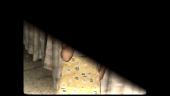
this is a queer picture,
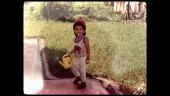
clothing at that time just did not mean gender at all.
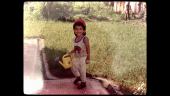
Even this is a queer picture.
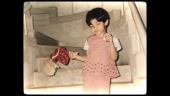
But later on, it started to,
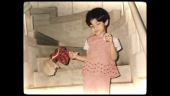
I don't know, kind of got put aside,
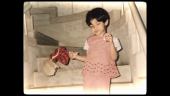
the lack of gender thing.
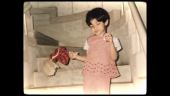
Everything was queer.
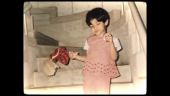
This one, little jester I look, it’s so cute!
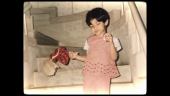
I had so much space being such a little…
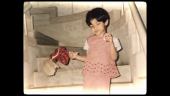
creature, such a little being! I had so much space
and the world was infinite to me at that time!
And from these pictures, I can...
there wasn't one home, there wasn't one space I was(n’t) myself at.
I didn't have different roles at that time, I had one role and that was just
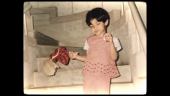
myself…
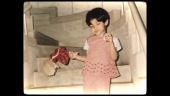
I was not student, daughter, I was just Nanki

This is when we moved into a bigger city, in Kanpur.

And in Kanpur, directly from a state board, they had transferred me to ICSE

and all of a sudden,

there were a whole bunch of kids and everybody had their shit together

and…

my identity was just going haywire,

so whatever the other girls did,

I (did) because I was told that this is the group I'm supposed to identify with,

so whatever they did, I also just picked up on the same stuff.
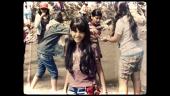
This is when I was hitting
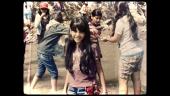
pre-teens or I think I was a teen here,
but, um, looking at this, (I) really
could not recognize the person, did not identify
with this person
because I also think I remember the intention of which this picture was clicked.

We were at army summer camp,
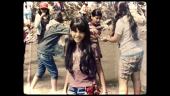
and all the girls,
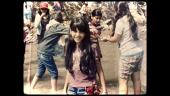
so to say, were put in similar barracks, same line, same this thing, you know this little binary society being formed… It’s just not pleasant to look back at.
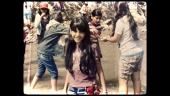
this little binary society being formed…
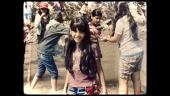
It’s just not pleasant to look back at.

But I do know that from my pose,

the way my hair was, what I was thinking – I remember

physically

putting my hair in front and putting my shoulders back and tilting my head to seem a particular way.

I think I was learning a lot

from the girls around me or picking up a lot of things and I felt like there was a need to be a certain way.

Just trying to fit in…

Feel very uncomfortable looking at them…

Till a time, I was definitely in a denial mode,

that I don’t really want to see much of it. The image and the person in the image,

how can it be changed?

Because the person in it should be different and
definitely, it is not me.
I did not know ‘queer’ (term) then, what it means but I knew I was not
feminine enough, that I was not a girl.
So, I had to navigate something in my personality because so much of it had stayed inside myself, that I could not tell
throughout my childhood, schools, colleges.
As I started to realise that so much is being left inside and I need to make someone understand

or if somebody else must also be going through this, this deep desire to make someone understand

this deep desire
to make someone
understand anything.
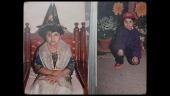
Because now I know I am out and loud trans person,
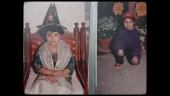
a female assigned at birth and this is the transition, to look at it.

Otherwise, I would not look at my childhood photographs, for instance,
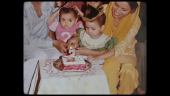
the one with the cake-cutting or the one with the frock…

Though the photograph is beautiful, but I mean, I could never feel happy looking at these photos.
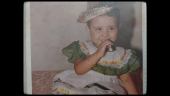
but I mean, I could never feel happy looking at these photos.
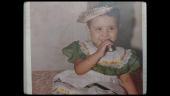
Maybe if I had been this cute little girl

but I am not,
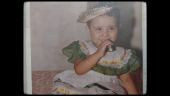
so these photographs would not make me feel good.
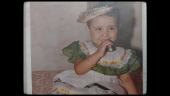
I am wearing a frock, bangles also and even a bindi.
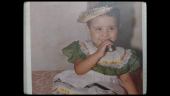
When the realisation came,

I would know not to put these and how it slowly got put aside as the detachment kept coming.

I did not want to look at these photographs at all

and I did not want anyone else to see either.

This frock

of mine should not be seen, these bangles…

When you would be looking at these photos at home,

someone else would always be there and they will start conversing with you–

see how beautiful you look,

what a pretty frock you are wearing –

and once the conversation has started,

looking at the photographs, they can see anything at anytime

what would I do then?

And this had happened a few times and that’s why I would run away from these conversations.

This was a constant fear

and this is also a big reason to not show these childhood photographs

or to not be there if someone is seeing them and to run away from that space.

For instance, this is one such photo. This is from my school programme.
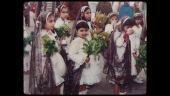
In Delhi, there is this procession ‘juloos’ and every school and the school kids from every school are the ones participating.
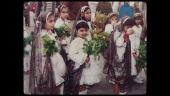
That would be haunting for me and for 4-5 years, it had remained so haunting for me.
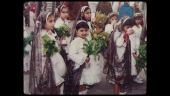
First of all, they all would dress me in such feminine clothes
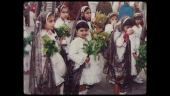
and then these clothes would not be bigger than a certain size.
My size was big and the clothes of my size would not be there
and the teachers would bully me.
That too, in front of everyone.
About these clothes, this skirt that it would not fit me.
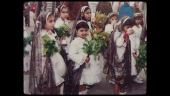
So my father had come and clicked this photograph.
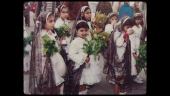
And I would feel that this photograph should not be seen by anyone, not even me…

That it should be hidden somewhere or be torn apart.

So, until a certain time, I have worn these clothes and I have seen things,

and the feeling has been horrible.

he entire time when I would be in that procession, I would wish to not be seen by anyone from around and

I would just wish for the day to get over somehow.

And just that.

And for 4-5 years, I had done this quite a few times.

(Sigh) So it was extremely tiring mentally, emotionally…

So there was this guardian, other than my mother, who would take care of me.

And so, her son was getting married and she had gotten these clothes for me.

Had brought this lehenga that I had worn and gone but with this long face, who could I tell this thing to?

who could I tell this thing to?

And then, my birthday had also come.
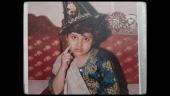
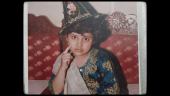
I have no idea why I had worn this lehenga,
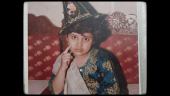
I had refused probably but then wore it at that time.
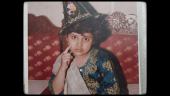
And I was sort of skinny at the time, not very fat,
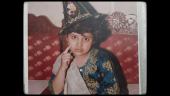
maybe that’s why I still wore it.
And
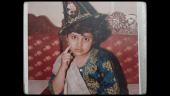
this is all I remember about the clothes but this photograph, oh I did not like it at all.
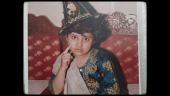
This lehenga, this pose,
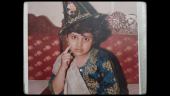
such a feminine photograph.
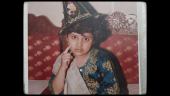
And yet on my face, you know,
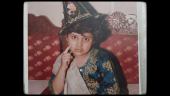
I have never seen much expression.
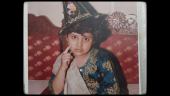
And
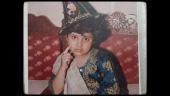
my father only was clicking the photograph.
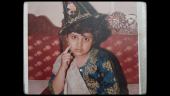
I don’t know, so many times, I would find these to be such dead photographs.
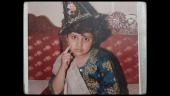
I could not understand anything, I would be clueless in front of my father.
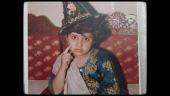
This scolding to make me sit
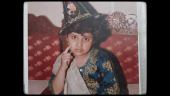
and then I would wonder if I could even take a few breaths or not in front of him, afraid that I might get beaten up.

But now,

I find these photographs cute.

Now, I have intentionally added them to my scrapbook.

For instance, I had put up this post on instagram, I had taken out this photograph of mine, the one with the frock
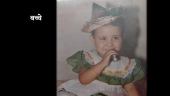
and I put a comment on it.
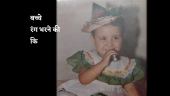
I felt it is important to show these photos, that side is also there,
slowly that acceptance came.
And now I feel it is necessary to see that side.
How can you not see it?
It takes so much time to speak, to make and to tell,
it takes so much from you and you invest so much.
This voice of mine is not just my own,
it is made of so many voices together.
In it, there is the voice of Shashank, of Gaurav, of Mayank, this is not just me who is speaking.
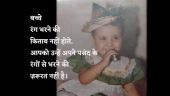
And to speak, to give this message is very important.
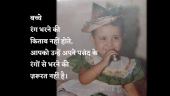
So, now I am happy with these images
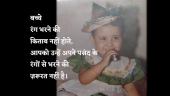
and this was a photo that I had never wanted to see,
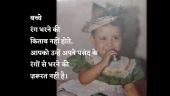
that if it had turned to ashes, would have been better.

Back in childhood, when I would look at my birthday photographs, I would not feel nice because in those birthdays,
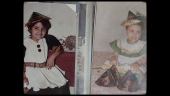
I could not see myself as
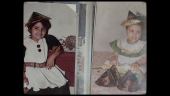
how I wanted to be, a birthday boy
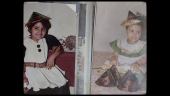
but I have only seen myself in frocks instead.
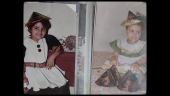
It was not a good feeling
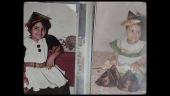
I would not see those photographs and more than that,
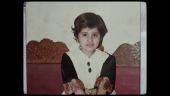
no one else sees them, for instance, my friend or my girlfriend.
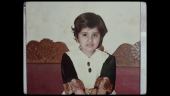
Those people, I would try my best that they don’t see them.

Somewhere, this was also the reason that out of those childhood photographs, I would pick photos that I thought I do want to show, and I made a separate scrapbook out of it.
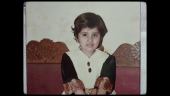
that out of those childhood photographs, I would pick photos
that I thought I do want to show,
and I made a separate scrapbook out of it.
So that most of these photos remain limited to the family albums and if I had to show my photographs,
I would show my own scrapbook. That these are my photographs, not them.
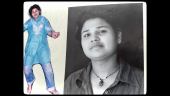
At that time, the authority on the albums was not mine.

So I had taken that authority on albums from my very childhood

and somewhere even my family came to accept that he knows where the albums are kept.
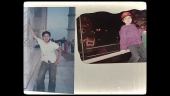
I had some other intention.

That when I would make photographs disappear, no one would know.
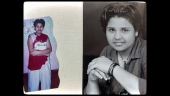
So, I used to curate those photographs
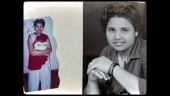
which
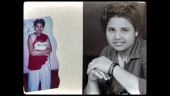
which I thought, according to me,
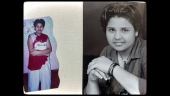
were on a masculine side more, not feminine side.
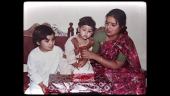
In my childhood, when I would look at photographs,
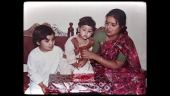
I would feel really happy looking at this photo.
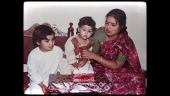
Because, in this, it’s not readily…
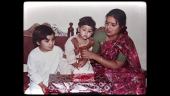
it doesn’t look like a girl is sitting,
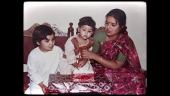
perhaps a boy is sitting. I am wearing a kurta
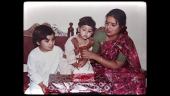
which is very traditional wear. Like that which my grandfather and my father
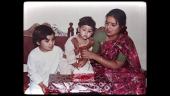
would wear and that I like. Proper. I remember even now, the feel of this kurta-pajama on my skin.
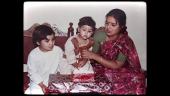
So, these were a few of the childhood photographs that I would look at.
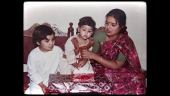
This is one.

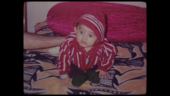
And then there is this photo in which I am wearing a cap and a blue sweater.

I would get excited looking at it, that yeah, this does look like a boy,

with this cap and it’s this very funky look.

Jeans and sweater, probably the last sweater I wore, I haven’t worn many after that.

I have dysmorphia from sweaters, they get very skin tight

so I still don’t wear them.

My 18th birthday, 18th or 19th, one of those birthdays.

I celebrated it with my then time of girlfriend, my first girlfriend.

She used to be extremely happy on my birthdays, I don’t know why.

I feel like if you do want to realise your birthdays, you should learn from your beloved,

your lover,

that what a beautiful thing a birthday is.

Both of us got our photoshoots done and both came out beautifully.

And

this used to be my hairstyle at the time,

nice, this is a nice photograph.
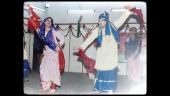
Here, I had done bhangra in school.
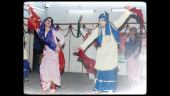
So, bhangra is anyways
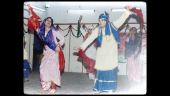
very masculine
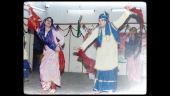
and then the style of the clothes, that was mine, that I wanted to wear.
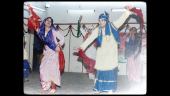
And
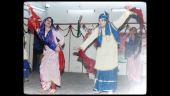
the fit was superb,
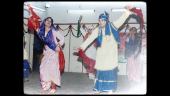
of these clothes.
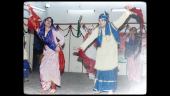
And
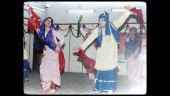
I was leading the dance troupe.
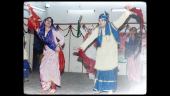
It was a lovely day.
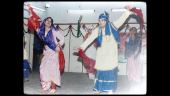
Amazing.
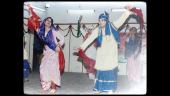
I was so happy that day.
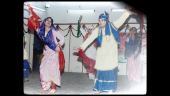
And then after this, when this photograph came out, it was the best photo of the day.

How much do we really understand queerness?

We get attracted but

we ourselves find it difficult to accept in society. We question ourselves that why are we doing this?

But perhaps here, I was giving it full authority.

So in certain clothes,

doing short hair.

And we were and she just grabbed me and kissed me and came this photograph

clicking this photo

and

she just grabbed me and kissed me and came this photograph.

Beautiful photo,

it is so full of love and so cute.

More than the love,

It was a very affirming photo for me.

So, I had gotten prints made I out of it and had put one in my diary.

The day itself was so great, performing that dance,

so performance art, bhangra,

made a ruckus in school

and then this…

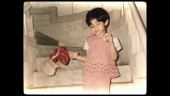
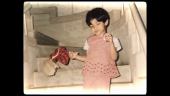
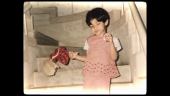
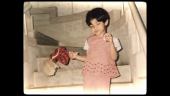
Umm yeah, so Jamalo was kind of a word

that I would get scared after hearing.

Jamalo, maybe kind of a ghost or something scary if it is ‘Jamalo’ word.

So, during childhood, if I would cry, say, I don’t want to eat anything,

so, mumma was like Jamalo will come and Jamalo will do this and Jamalo will do that.

And I was like, noo, I don’t want Jamalo to come so I used to do that task, ok?

But later on, when I grew up, maybe like, when I came in, umm,

when I developed my senses, maybe then you can say,

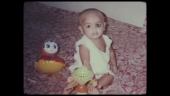
when once we were visiting these type of photographs and then came this photograph, the same, in which Jamalo is clearly visible.

So, my mother told me that this is the Jamalo and I was like,

Seriously!?!

You have been scaring me with her name for so long.

If you look at this doll, it is not scary at all, she is so innocent-looking, the poor thing.
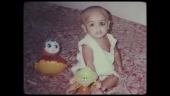
When I saw this photo that I used to play with this doll and I got to learn that this doll’s name was Jamalo.
(giggle)
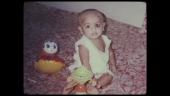
So that was quite a new thing, you know.

I was like with this name, they have been scaring me my entire childhood and this is the Jamalo?
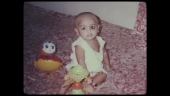
See the contrast they have developed in me,
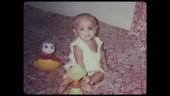
that my association with the doll, what it was during childhood because I don’t have the doll anymore and I did not have it
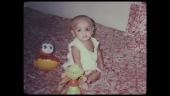
when I grew up, since this is a very early childhood photo.
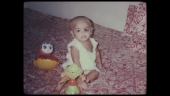
So, I had very good relationship with the doll
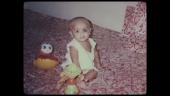
but with the name, it was extremely opposite.
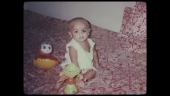
See, for me, it was quite a moment of realisation that how things could be different.
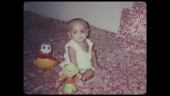
that how things could be different.
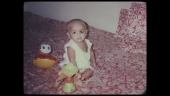
That the name that I was afraid of since childhood, because I did not know that my doll’s name was Jamalo,
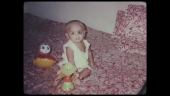
right?
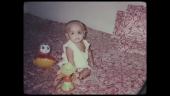
In my head, the image of Jamalo was something different
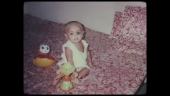
and that image formed because of a scary thought that was being fed to me.
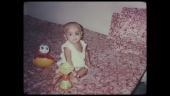
Actual Jamalo was actually different.
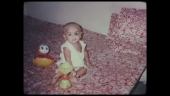
So, how come what is seen is different and what happens is different
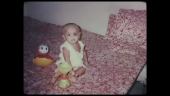
and what is told is different

and how a child starts, you know, feeling about it.
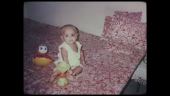
Does that make any sense?
I imagine it like a beach.

There is a magnificent sand castle that has taken years to build.
A row of pink seashells for gables,
rooms of pebble and driftwood.
This is your life.

Then comes the affair,
nagging bloodwork,
a freeway pileup.
The tide moves in.

The water eats your work like a drove of wild birds.

There is debris.

A tatter of sea grass and blood from where you scratched your own arm trying to fight the current.
It might not happen for a long time,
but one day you run your fingers through the sand again,
scoop a fistful out, and pat it into a new floor.
You can believe in anything,
so why not believe this will last?
The seashell rafter like eyes in the gloaming.
I’m here to tell you the tide will never stop coming in.
I’m here to tell you whatever you build will be ruined,
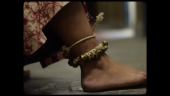
so make it beautiful.
Pad.ma requires JavaScript.
