Mumbai Music: Farida Sabnavis 1
Director: Surabhi Sharma; Cinematographer: Ajay Noronha
Duration: 00:38:45; Aspect Ratio: 1.778:1; Hue: 24.676; Saturation: 0.190; Lightness: 0.195; Volume: 0.124; Cuts per Minute: 0.181; Words per Minute: 149.775
Summary: Farida Sabnavis started learning Hindustani music at age 35 and continues to be passionately involved in the process 15 years later. She studies with Sharmila Shah, whose guru was Jal Balaporia. Here she speaks about her initiation into music, her deep engagement with singing, and how music occupies a central place in her life even as she continues working in the corporate world.

Making Music

TN: Farida, we wanted to talk to you about your entry into Hindustani music, the many years you spent being a student, a practitioner of the music... If you could also tell us about your teachers. What's your own sense of the place of this music in Bombay today, and in your own life, I think this is what we would like to be discussing. Literally you can start anywhere. You could talk about how you first came to Hindustani music, why you decided to start studying it.

Ok, so...let me tell you that for me..when I was growing up the only music that I was familiar with was Hindi film music, so I grew up on old Hindi film songs, I would study with old Hindi film songs [playing in the background]. I didn't know anything about classical music till I got married. If at the time if you'd asked me who is a classical music singer, you know, I would have said maybe 'Bhimsen Joshi'. Nothing else. I mean, I was that raw. And then I got married to a person who was steeped into classical music, so I still remember, you know, the first weekend after our marriage, he got up in the morning and put on 'Bhairav' [the raag] and I was like 'hello, you know, what is this?' and quickly after one and a half hours I changed to a Kishore - Rafi kind of thing. So we had these two different music genres going on in the house. We were in Bangalore at that time, and then, he told me there was a classical music concert. I still remember my first concert was by Lalgudi Jayaram. He [my husband] said, why don't you come, and I said, I'll get bored. He said, then sleep. [But] just come and see what it is like. And I said, ok, and I went and attended a classical music concert. And I was hooked onto it. Then I wanted to understand. So actually if you [ask] who was my first teacher, it was my husband.

Whatever little he knew... it's not that he... he's actually picked up music through Spicmacay concerts in Delhi, and that's how.... and whatever I understood was through CDs. So that was my first exposure to classical music. And then we started attending concerts, and slowly I got hooked onto it. So then even I wanted to listen to classical music at home. Then, I was busy in my corporate life. At 35, I decided to take a break from the rut, which is..you know...corporate life, and I said I want to do part-time. And then I said what else do I want to do, and I always wanted to learn singing. So I said if I have to learn singing, I was very clear that I have to start and..it's like, your foundation should be strong. So I was very clear that I wanted to learn classical music. Start with classical music, and then, you know, if you know classical, light forms become easy. So that is why I said I will look for a teacher who will teach me classical music.
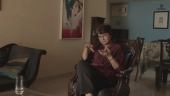
And in my rounds or through my friends or whatever, I met Sharmila [Shah]. Sharmila at the time was performing at Prempuri [ashram at Hughes Road which organises pravachans and bhajan events]. So I went and approached her and...then it was all a strange coincidence that happened. Sharmila's guru was a Parsi - Jal saab - and she was learning under him. So she said, ok, I will teach you classical music, though at that time she was teaching bhajans and 'folk' to others. But she said 'I can start teaching you classical music'. So that's how I started classical, and my first raag was Bhoop. And that was my first step.

I want to know why she felt, having had a Parsi for her own guru, that she felt she could teach you, also a Parsi, classical music. What was the classical music connect?
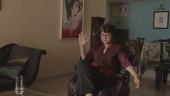
No, so...she told me the first time I went to her and said I wanted to learn music, she asked me 'have you learnt before', and I said 'no'. 'Have you learnt in school?' I said 'no'. I think she was a little shocked that...what is she getting into.. you know, with this person. So she told me that she'd make me sing 'saregama', and then she'll take a call on whether she can teach me or she cannot teach me. So the first two turns were really on an experimental basis where she was feeling... whether there's some hope or...You know it's not that everyone can sing. So I said fine, I was willing to give it a try. And then she told me later on that when she made me sing she found that my taal was perfect. Not that I knew at that time what was sur and what was taal. But she felt that I could pick up taal fast, she felt that I was dedicated, which I was, because if at 35 you decide to learn something, either you do it well or you might as well not do it. So that is how she actually started with me, and I can tell you that the first time we did taan, or the first time we did taraana, I was wondering why I ever wanted to learn classical music.

Because...you are aware of this...'daani tom' and all. I used to write in English, because I'm not used to this kind of language. Even now there are..when you have Braj Bhasha and things like that, I'm not used to it. So I started understanding what I'm singing...With Sharmila, for about five years, I did those chhota khayals and the basis of raagas. And then she put me on to another... a senior student of Jal saab's, Rameshbhai Panchanan, saying now he should teach you classical. Because the basics I've taught you, but you need to go into the bada khayal and things like that, and he's very very senior to me and he's very good. I learnt under him for four years. Unfortunately he passed away. So then I was thinking, should I get another teacher or whatever, and I was continuing light music with Sharmila. So then she said, ok, let us go back into classical. So now I do both light and classical with her.
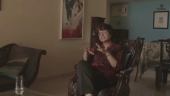
That's really been my journey and I've been doing this now for 14 years. Anybody who wants to start music - and everyone thinks, oh it's so easy, but it's like - for the first ten years you don't know what you're doing. You think you're practising and practising and practising, but nothing - because your mind knows. Because I was interested, I know what you should say. But the throat is not moving! Because it requires that practice, it requires that thing. And then suddenly one day, after ten years, I don't even know in which year, your throat is responding to your mind.

And when that happens, it's bliss. That's the beauty of classical music. When you touch a note, you know whether you've touched it or not. When you touch a note, you can feel the vibrations. I mean, I can feel the vibrations when we end a raag or when we end a thing [cheez] - when I'm pratising with my guru - and I do it in this room - I can feel that around me. And that really gives me a high. When you're doing badly - it's not that everyday...you also go through ups and downs, when you're doing badly you know it's not coming out right. So classical music has really helped me.. so now if you give me any light composition, it's really very easy for me to pick it up. Because (a) I know the basis of the raag, re-ga-re-sa and all moves very fast because your throat is...used to that. And you know you can sing well. It gives you confidence to sing. I think that's really been the thing.

Now coming to techniques of learning, the way I had with both my gurus is we would take one raag and we would really do it in depth for two months, three months, if required. Starting from the surs, to the chhota khayal to the bada khayal, to the taraana, and then the free-flowing..you know...which happens, which is where they sing and I follow them. That was the thing..

Once you have the architecture in place, and when I am used to the raaga, then it becomes in a sense almost like a guru-shishya thing where they are doing free-flowing and you are following them, and that becomes enjoyable. Currently the way I do it is that I do four hours with my guru in a week, split into two days, and then everyday I spend one hour, which is not sufficient but that's the way it is.

TN: There's something else that you hinted at, which is, you mentioned that Sharmila Shah's teacher was a Parsi and that you yourself were. Was that a factor in her decision to teach you?
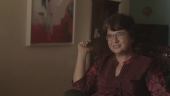
FS: No. Oh, for her to teach me? I don't know. TN: But on the other hand, was it a matter of surprise to her that you wanted to learn Hindustani music? FS: Yes.
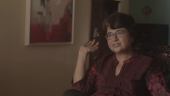
It was a surprise to her. It is even now a surprise to all my bosses, in the corporate world when I say I learn music, they all assume it is Western, and Western classical. So HIndustani classical...they think maybe I'm just fooling myself, myabe they think I'm mad, Parsis are mad! That's why I'm doing it. But nobody actually... till someone hears me sing, they think it's a time-pass I'm doing, because they can't associate a Parsi with this.
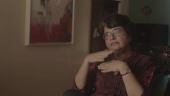
And even among my co-students people who don't know me - I mean there are students who have now known me for 14 years, and they've heared me sing at various things, so they know... but if there's a new student who comes, the first thing which they say is, 'my god your Hindi is clear'.
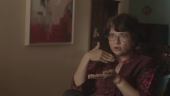
Actually in a spoken [situation] I can't give you any Hindi dialogues but when it comes to music my Hindi is absolutely accent-free. There's no Parsi acent either in the Hindi or in the Sanskrit - there are some words that you have to pick up. If I have to work on the pronounciation I work on it. Because you can't be sitting on stage and getting people to comment on your accent and not on the sur.
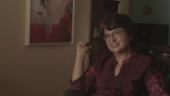
TN: I think the matter of surprise amongst your bosses and fellow students and so on may be applicable today - yes of course you could be surprised today [that a Parsi is studying HIndustani music]. But surely if the Parsi theatre in the 1860s was the first platform to make Hindustani music widely available on a public platform, and was actually responsible in some ways for the popularisation of such music in a place like Bombay and elsewhere as well, it seems ironic, then, that this surprise should be manifested.
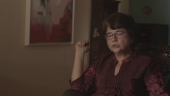
FS: No, no, absolutely, absolutely. Even if you look at the Hindi film [industry], a lot of the groundwork was done by Parsis. The first music director, if I'm not mistaken, was Khurshid; there's a lot of Parsi influence which is there. It's just that...media...played up more [someone like] Zubin Mehta. Also it's perceived that Parsis have taken all the British culture, the British arts and things like that. And if you even think about Zarine, who again was an extremely talented classical music performer, but they are seen as more [like] oddities.
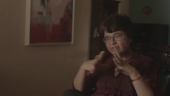
But the general...if you go to a Parsi home, I don't know how many of them actually have a Hindustani classical music CD or a whatever. It's because you don't grow up in that atmosphere now. I don't know why.
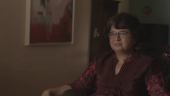
TN: It was probably different before the 1950s or so. FS: Yes, absolutely, absolutely. There's a lot of Western culture.. I'm saying, why look at Parsis, even if you look at other communities now, I think there's been so much of influence of Western music that people have forgotten the traditions, people have forgotten the rich heritage we have of music.
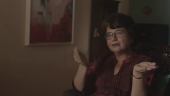
And sometimes some song becomes popular, and you actually tell the younger generation its roots are in this raaga, that actually it is this raaga-based song that ...it really occurs to them that, oh, this is where it is. I really think media needs to play a huge huge part in promoting classical music, because we really have a rich heritage and the repertoire is vast.
People think classical music means 'slow', which is so wrong. I don't think anybody ever has heard what a taraana is, and how difficult it is and at what speed it goes. It goes faster than most of the drums they are used to. But they don't know that. I mean when I tell them...they are shocked. So I think it's just that maybe we need to do a lot of work and what I feel good now [about], is that the internet is doing what a basic media should be doing. There if someone is interested, there's lots of resources where people can actually use it to understand what works and what doesn't work there.
TN: I know that you invest a lot of time in your own learning setting. What amount of time do you spend going to concerts, listening to other ..major musicians?
FS: So the way our day is structured is that we - my husband and me - we like to start with classical music. We have a very good collection... and if we can we end with classical music. And now that I know classical music, my husband says it's become a pain because I will say, oh this raaga is not right for morning , please let us put this [instead]. And he's like - please, when you didn't know, I used to put anything and you used to enjoy it. And now you say only this in the morning and only this in the night. But as you learn and as you understand, you see, you can pick and choose from the right raaga.... Frankly, television in my house is only when my husband is there and he wants to hear the news and things like that. When he's out of town there's no TV. I don't watch TV. It's only music that I listen to. So I surround myself with music. When I'm cooking there's music... it's a part of my life. If you take away music from my life I'll really feel incomplete.
If I do not practise for one week, for whatever reason, I'll feel something is missing from my life. At the same time you can be under any amount of stress, you know, whether it is traffic stress or some personal stress, but the minute you say 'sa' and you are in sur, you forget everything. You have to. Because I'm still at a stage where if I do not concentrate hard, the sur slips. So all your concentration is on that and you forget the world and you're so happy. Actually it's almost like a meditation session for me and then I come out of it and I feel I'm ready to take on the world.
And I'm very clear that when I'm practising, no phones. I mean, it's just switched off, the cell is put in one corner. When there was a world without cellular, you existed. You cannot be checking messages and singing. It just doesn't make any sense to me. Nowadays in concerts you see people on stage, on stage - forget in the audience - with cellphones. And I find that the purity is missing. And I think that's what's important. For me, it's more [about] concentration. Because you have to focus.
TN: I think what comes across when you speak about music is what a singular and individual connection it is. FS: It is. Let me tell you I have been absolutely focussed about learning. If it means that...I have given a time [for the class] to my guru, both our track records...she is as dedicated as I am and Rameshbhai was as dedicated. We have a 90% track record of ensuring that we meet and we do it. And this has been across 14 years. Only 10% of the time..specially if there's been a medical emergency that I've cancelled the class. Even for her it's been the weather or something that we cancel the class. If both of us are in town, we definitely meet. And it can be so easy for me to say I cannot meet.
Because you know how the demands on your time are. Oh you can do this, and you can do that, and whatever. And I've had client meetings where I've gotten up and people have said 'so what are you going to do?' and 'Oh, music, arre...' You know how it is. 'Oh you're going to learn music? You can always cancel it. Shift it to another day'. As far as I am concerned- I'm sorry, if your meeting is important, my music is equally important. I have been extremely strict about that. ....There have been times when there were meetings fixed with CEOs and I say I'm busy, I'm not coming.
You want to reschedule the meeting you can reschedule it, otherwise ... if you decide that this music is not important, you can again slip into a day to day life and forget about why you started to learn music. And my thing is very clear. If at the age of 35, I decided I was learning music, I didn't do it just for the laugh.. to say arre, I'm also learning music. It can be...it's almost like a tickmark sometimes for people. 'I'm also learning music'. No, I <really> want to learn music. So if you want to learn, and you're starting from a blank background... please understand I had no one in my family who was there... my mom also loves music..she had a harmonium, she learnt a few bhajans and all. But I don't come from a musical background or from a musical family. If I had decided that I want to learn music, I had to give it the same concentration I gave my career.
Because to me both are equally important. TN: I think this is what probably sets you apart from most people who learn music. Because it's either a hobby or something that you do on the side.. It's something that matters a lot to them, but they're unable to give it the kind of time that it requires, and a lot of tensions between students and teachers is about why aren't you giving it enough time.
FS: Absolutely. TN: Because it's as though it's a problem with being a modern person today and living the kind of stressed out lives that we lead as people who have careers, who are doing other things, supposedly more important things. So it's really refreshing to hear you talk about the equal amount of dedication, time and energy, comitment that you give to the music.
TN: I wanted to ask you something slightly different. When people say they love music, how is that manifested? Usually it's manifested by [going] to every single concert; they dedicatedly follow certain singers, they will collect stuff about the music, and they will collect music itself, they will listen to music, they will go out to listen to music. In your instance, I don't hear a lot of that. In your story about your relationship to music. It's much more about cultivating yourself, and your practice as a singer. I find that very remarkable.
Because most people don't bother to get to that point where they have to then learn music. They always put that off, saying maybe one day or maybe it doesn't matter. Because I'm manifesting my love for music in different ways.
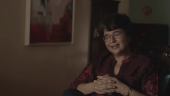
FS: Yeah. I... TN: So do you want to tell us a little bit about that?

Ok, so like I told you - at 35, when I decided that I'm going to do part-time in the corporate world, I had a choice. I could have done something else. But...till 35 I was listening to music. I was going to concerts. So you know music was part of my life. But somewhere I believed that I could sing. Please don't ask me why.
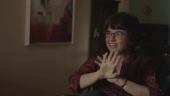
Not that I had ever sung. I mean people keep on asking me, you must have sung in school. No. College? No. But somewhere...there I must give full hundred and ten percent credit to my husband. He was the only one till then who would hear my bathroom singing and kitchen singing, and he kept on telling me, you have a good voice.

And maybe sometimes you go over to a friend's place, and you just hum when a song comes [is heard], and people say - oh, you seem to have a good voice. So maybe somewhere in the back of my mind I had this thing that I have a good voice, but do I have a voice for classical, I didn't know.

Also, everyone told me and I also believed that 35 is late. I mean, you can't say I am 35 and I want to be a professional classical music singer. That also I was very well aware of. That...your voice..the flexibility...I mean if you start at 8 or 10, and I envy people who can do that and give the comitment at a young age. They would learn so much faster than me. So I said that since I now have time on my hands I would rather dedicate it to something which I've always been interested in.
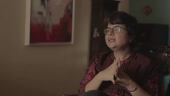
So I said let me try, and I can tell you that if my gurus had not supported me, if my husband had not supported me, through the early years, maybe it would just have remained, like for most people, oh I love music. Even now when I talk to people who like music and who attend concerts, they say but oh how did you decide to sing? I said, I <decided> to sing, because I decided to take the plunge. And I tell everybody, try it out. Maybe if not voice, maybe it's an instrument. But if you like music, then you should learn to either sing or play or whatever, because it gives you so much of joy.

And I believe I have grown as a human being because of music. I believe I have become patient. I also believe that because I do the practice and because you know I focus on that, I get away, I have 'me' time. Then anything else..if suddenly after that, there's a pressure, there's a crisis, I'm able to handle that better because I've had that 'me' time, I've had that time to concentrate. I've had the time to get away from it [all], so I can then tackle a crisis far better than if I was not learning music.

And, to me, what music has given me is so much information about India. When you learn bhajans of Kabir, or Tulsidas, or Meerabai, you feel enriched, and it has made me philosophical. I always..I mean while you study, which is part of the Indian upbringing - that you study, and you educate yourself, and you get a job, you know. You rise in the corporate world. Because it's a part of your stability, you know, that you are getting yourself financial stability.
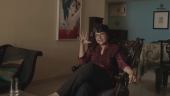
I think singing some of these poets' words - it gives you a philosophical outlook on life. That there is a material thing, there's also this very ...there's a part of you where you have to give back to society. There's a part of you where frankly all these things don't matter. Khaali haath aaye hain, khaali haath jaayenge [we have come empty-handed and go away empty-handed]. The day when my guru taught me a Guru Nanak bhajan - written by Guru Nanak - I felt so thrilled, that Guru Nanak's words I'm trying to ..understand what he did.
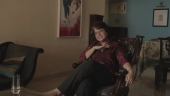
And that's the beauty. If you take...if you look at poets across India, actually they're saying the same thing. Which is...you be happy, don't depend too much on your family and friends, ....if you are happy you can spread happiness. Material things don't matter after a particular point in time. Don't be angry. ..It just...so much negativity into you. So actually...music has brought a lot of positivity in my life. So when you [ask] what music means to me that's really what it means....And the fact that at 35 I said I want to sing, and then now at 50 I know I can sing. I mean it's been a journey.
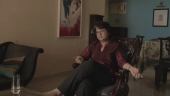
TN: That's a most fascinating story. But you said that learning about the saint poets, learning about the actual meaning of some of the bhajans or the khayals means a lot to you. FS: Yes. TN: But someone might well say just for the sake of argument that while listening to it [sung by somebody else] I get the same meaning. I think I'm really interested in getting to the heart of what it means to actually sing.
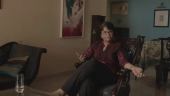
Of course when you listen to it, you do that. But when you're able to express it, in your own voice, I don't know...how can I explain to people the thrill of hearing your own voice...let me tell you, in my corporate life I have presented to a lot of CEOs and people come and say 'very good' or whatever, but if I have to say what gives me the greatest joy is..when you sing..and somebody who doesn't know you at all comes up to you and says, oh we really enjoyed it, or you have a good voice. It gives me, because it's in a sense all my gurus' training...but it gives me that satisfaction of saying, oh I achieved something.

Maybe ...it's really that. To me the greatest thrills of my life have been when people turn and say you have a good voice. And only I know what I have done to slog on that voice... when I started at 35 I was laughing and telling my friends that not only do I have to exercise my body, I'm exercising my voice also. I have to do both things simultaneously.
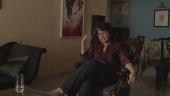
And I think the other thing which I like is...when you're dealing with youngsters... I deal with a lot of youngsters even in my corporate life, I can tell them that this is what music is. Or if there's a popular song playing, I can pick up and say, this is based on Bhairavi [raag], and they'll say oh is that so, we didn't know. So I'm actually thinking now that maybe like music appreciation but on a very basic level I can take as part of my training programmes. If nothing else, I should be able to communicate...classical music. If I can get even two people interested in classical music the way my husband made me interested, if nothing else, I'd be spreading...in a sense it's like carrying forward the tradition. Or if somebody...hears me, and says ok I will also learn classical music, to me ..maybe in my small little way I am contributing to people understanding what classical music is about.
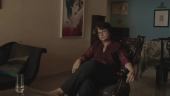
TN: I wonder if you would think that being in Bombay gives you a kind of access to this music, in a way that maybe if you'd been somewhere else...
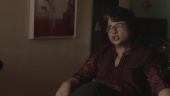
FS: That's not true. Because when I was in Bangalore...actually, in a smaller city..when I was in Bangalore I had more time to attend the concerts and things like that. And I believe that yes, while being in Mumbai you have a wide choice of people to select, and maybe you have a lot of halls and you can go... I believe if you are interested in music you will always find an avenue to cultivate that, whichever part of the world you are in.
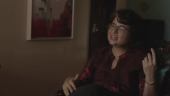
In today's day and age I don't think anybody can say, oh I'm in this part of the country and I don't have this and that.. ..If you want to learn and if you want to be associated with music...today...you can be associated. What Mumbai brings with it is the advantages of being in a city, the advantages that...it's very easy.

You don't have to search..here where I am sitting there are two halls within a kilometre of each other. So if I want to attend a concert I can walk down in a sense, to any of those halls.

TN: Which ones are these?

FS: So [pointing] one is here at Prabhadevi [TN: The Ravindra Natya Mandir...] - Ravindra Natya Mandir, and then the Nehru Centre. So both are within my radius in that sense...because again distance is an issue. And between the two you have a good choice of concerts...which are there.. Also, if you are in Mumbai and someone is interested in reading up...there are a lot of libraries where you...have easy access to that. And then of course it's a place for Bollywood, as most people use it [the term], for that accessiblility. But for me, it just happened that I was in Mumbai. I can tell you if I was anywhere else and I had decided to learn, I would have found a teacher, or whatever...
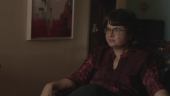
SS: To come back to your learning ..the way you've learnt. I was wondering if you'd be able to point out to us certain unique teaching styles that Jal Saab brought with him which are being carried forward when you are being taught...Is there anything that is sort of unique or remarkable which is being carried forward through his lineage...

FS: Yeah. So I think what it is important is really the khayals which he had had. He had an excellent collection of khayals which he had built, which he has given...his students, and ...from there it gets passed on to you. Also his collection of taraanas. I...know a lot of people who learn the music who don't even know what a taraana is. Whereas I can...for all the raagas I know a taraana. It has come down from him. Because not every gharana has taraana as a part of their thing, but we come from the Gwalior gharana, and taraana is a part of the...you know when you are taught a raag, it's the concluding part and an extremely important part of that thing.

SS:Is there anything else you know about Jal saab's performative style that you could point out to us, that you might have heard from your teacher...

TN: Have you had a chance to listen to Jal saab?
FS: Yes, but by the time I listened to him, he'd really grown old...but from what I have heard...he had a very rich voice. I mean you just listen to him and you are transported...that's what I have experienced, from what little I have heard.

TN: I think that what happens when you listen to someone, like I'm sure I would listen to you sing, and if I had heard your teacher, I would look for elements of that..mode of expression in you.
FS: It will be very common. Yeah, I can turn around and tell you that it's like to the 'T'. Because you are hearing it, my style would be absolutely groomed by my gurus. There's no question...that my whole singing style in classical is influenced by them.
TN: So similarly if we take the argument backwards, they would be influenced by how say Jal saab used to sing.
FS: Yes, yes. And that's been my advantage in the sense that I have stayed with one gharana and one style. So even when I switched gurus, to me it was a continuation of that style. So..I didn't feel any..back and forth between two gurus. It was the same lineage, the same gharana, the same style...which really helped me. Becuase..I didn't feel any problem.

TN: They are also two gurus who learned from the same person.

FS: Yes. Two gurus who learned from the same person, so the bandishes are the same, the cheez are the same, the way they do the variations are the same, the taans evolve in the [same way]. To me...I've been really lucky in that sense.

TN: Have you recorded yourself singing?

FS: Yeah.

TN: What does it sound like to you? Do you use it as a means of auto-correction or do you [do it] because it gives you pleasure...

FS: No no no. When I first started out and I recorded myself I said, this is really bad. I don't know how anybody is even teaching me how to sing. Because like I said, you 'know'. And in terms of classical music the advantage of starting late...is because of the taal, you would not..[??] classical music you have to be very good in mathematics to get the beat of classical music. So I picked that up very fast. You know, the tritaal, I practise on tritaal now in my sleep - I kinow where to pick up tritaal...because it's been ingrained into me. And that was the advantage... because when my guru told me seventh sur or ninth sur or whatever, I understood that.
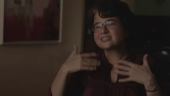
Because I was starting at 35, and to me it was ok..so it was mathematics..these are the things...you can pick up. So initially when I recorded myself, and I heard the taans, I was like, what am I doing. Because you know it was not hitting the notes, so I use taping solely for auto-correction. And again there, ...I also tape my gurus, so I tape them, and I tape myself, which is why...your style automatically follows your guru's style. Because you are just hearing them, you are hearing them day in and day out...Even that slight variation they would do, you pick it up. And if ...when you're performing..I feel very happy when I'm able to get those little little nuances where you touch a sur and come back. And if you can do that, then you feel happy.
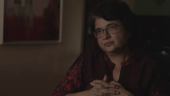
TN: Would it be possible at all to sing something for us?
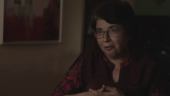
FS: Now?
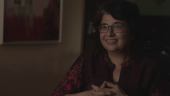
TN: Yes. I mean in a very impromptu sort of way. Because it's part of the conversation about learning. So anything that is bothering you right now, that you're trying to get right. It's not about a performance, it's about giving us a glimpse of how you have learnt. So anything that is right now passing through your head...
FS: Ok. So...
TN: And you could stop yourself in the middle...you could comment on it, anything.
FS: Ok. So.....can I go and get my book?

TN: Sure.
Pad.ma requires JavaScript.
