Taaza Khabar: Interview with Shanti
Director: Bishakha Datta; Cinematographer: Ranu Ghosh
Duration: 00:20:24; Aspect Ratio: 1.333:1; Hue: 17.947; Saturation: 0.605; Lightness: 0.074; Volume: 0.137; Cuts per Minute: 0.931
Summary: Part of the footage of the film Taaza Khabar directed by Bishakha Datta and produced by Nirantar. The film is about the journey of a team of all women journalists of Khabar Lahariya (a grassroots newspaper published by the women themselves) through several obstacles. The determined efforts are to ensure the 62nd issue of Khabar Lahariya reaches its readers on time. The women are from Chitrakoot district in U.P. who report stories that find no space in mainstream media. It also portrays how these women have created their own space and established their identity in a context where patriarchy and caste-based discriminations are dominant. In this event, Shanti, one of the Khabar Lahariya journalists talks about her story and how she became a part of the newspaper.
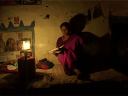
It is night and Shanti, one of the Khabar Lahariya journalists sits in the dimly lit living room of her home with a lamp glowing beside her. It's a rural household with minimal furniture. She settles herself comfortably on a bed and starts to write notes. She reads out what she writes, lost in thought. She talks to her family members in between her work. One section of the wall has several idols and pictures of various gods. She takes time off to talk and play with the children, singing songs and entertaining them. She asks one of the younger ones if she had her food. The child smiles and responds. The faint light from the lamp lends a slight glow to their faces.
Karwi, Chitrakoot
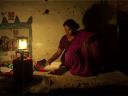
Woman, journalist, notes, rural, home, walls, book, notes, pen, bangles, lamp, light, night, water, drink, bed, family, children, money, sleep, weak, medicine
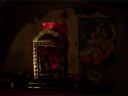
gods, idol, pictures, worship, bed, sing, play, goat, chair
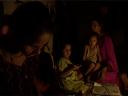
Khabar Lahariya, sons, daughters, daughter-in-law, alone, live, husband, job, travel, care, leave, fight, village
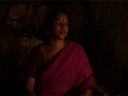
Shanti is interviewed by Bishakha, who asks her about herself and her family. Shanti tells her that she is a journalist with Khabar Lahariya. She has two sons and three daughters. The children in the home are her daughter-in-law's. She lives alone now as her husband did not like the nature of her job where she had to travel to various places. He also did not take good care of her and they used to fight a lot. So she decided to leave him and live on her own.
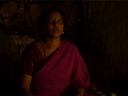
Bishakha asks her where her home is and how long it takes to travel to Khabar Lahariya every day. Shanti tells her that the duration to reach depends on the transport availiable. As trains are not very regular, she prefers to take the bus. Sometimes she stays back in office if it gets too late.
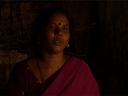
Shanti narrates how the newspaper is always in her hands, and distributes it to people whenever she gets the chance. She finds her job very interesting. She migrated from her village around 30 years back thinking about her children's future. Her village, located in the forests, had a lot of dacoity problems and she decided to move out as it was a dangerous place to live in.
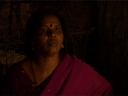
dacoity, travel, transport, trains, buses, office, late, stay
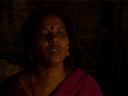
Shanti talks about her marriage and how she got married very early. She was as young as five or six years old, when she was married. After around ten years, her gauna took place. ['Gauna' is a northern Indian custom and the ceremony associated with the consummation of marriage. Associated with the custom of child marriage, the ceremony takes place several years after marriage. Before the ceremony the bride stays at her natal home. Marriage is considered only as a ritual union and conjugal life begins only after gauna]
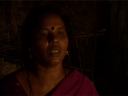
marriage, gauna, happy, man, independent, change, respect, support, work, decision, ahead
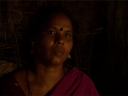
Shanti shares how her life changed after joining Khabar Lahariya. She never imagined that she would become a journalist. One she started educating herself, she realized that she doesn't always need a man to support her but she could support herself by working and earning independently. She now feels like she is respected much more by people around her. She wishes to move ahead in her life in this direction.
Pad.ma requires JavaScript.
