Cinema as Sight Seeing
Duration: 00:11:01; Aspect Ratio: 1.333:1; Hue: 353.109; Saturation: 0.097; Lightness: 0.525; Volume: 0.402; Cuts per Minute: 27.859; Words per Minute: 12.160
Summary: Cinema as has always served as a panorama of the world, and these two clips take us through a 70mm sight seeing tour of the world for the costs of a movie ticket.

Around the World
Around the World in 8 Dollars:
A fascinating tour of the world with Cinema being the your virtual window to the world. Cinema as an apparatus of modernity finds itself configured in specific ways in developing countries. The experience of most postcolonial countries has been that of a lack vis a vis western modernity, and hence the idea of the 'foreign' was always a space of immense aspiration. For middle class Indians (atleast up to the eighties, the visit of foreign relatives was marked by great anticipation and excitement, the promise of foreign toys, chocolates and perfumes).
For the longest time traveling abroad was unimaginable for most people, and cinema played a key role in displaying the world. The 'fantasy space' of cinema served as the arbiter of what it meant to be modern.
Writing about the role of cinema in Africa, Brian Larkin says that "In African postcolonies like Nigeria, a trip to the cinema has always been translocal, a stepping outside of Africa to places elsewhere. To step from the foyer into the dark night of the cinema hall was to be magically transported into a universe where American realities, Indian emotions, and Hong Kong choreography have long occupied the fantasy space of Nigerian cinema screens".
In this particular scene Raj kapoor transforms his broad humanism into a tourist brochure, displaying the various delights of the world to us. A cinema ticket was literally the cheapest ticket to see the world, and one could go around the world in eight rupees.
Aspiration
Disneyland, USA
Europe
Global
Modernity
Raj Kapoor
Russia
Tourism

Travel the world

Be a friend to mankind
Fall in love with people

Travel the world

As a friend of man
Fall in love with people

Around the world in eight dollars
Around the world in eight dollars

phantas.ma

Flashy Los Angeles
Home to colourful Hollywood

Come see Disneyland
Fairyfolk's country on earth
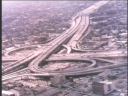
Flashy Los Angeles
Home to colourful Hollywood

Come see Disneyland
Fairyfolk's country on earth

Travel the world

Be a friend to mankind
Fall in love with people

Around the world in eight dollars
Around the world in eight dollars

When I saw the Grand Canyon
( I was reminded of what ) I ignored
No sign of you, Oh wow, Miami

Travel the world

Be a friend to mankind
Fall in love with people

Around the world in eight dollars
Around the world in eight dollars

Those who want peace
We will die for love
We shall say something to all
Erase hatred from the world

Tokyo
Tokyo
Another Chitrahaar favorite which afforded us a relatively cheap trip to Japan, Love in Tokyo showcased the marvels of Japanese modernity to an Indian audience accustomed to thinking of the west as being the only index of modernity. This song has Asha Parekh serenading Joy Mukherji in a kimono, singing sayonara sayonara. Asha Parekh would eventually go on to become the very conservative and controversial head of the censor board.
Lynne Kirby refers to the experience of cinema as the paradox of travel without movement. Arguing that Hindi cinema in Africa provided an alternative to the modernity of Hollywood, Brian Larkin says "To step from the foyer into the dark night of the cinema hall was to be magically transported into a universe where American realities, Indian emotions, and Hong Kong choreography have long occupied the fantasy space of Nigerian cinema screens. Cinema is seen as distinctively modern because of this ability to destabilize and make mobile people, ideas, and commodities. Onrushing images that raise the specter of cultural colonization threaten the local construction of space. This process of cinematic transportation is both ambivalent and multivalent. It erodes "the cultural distinctiveness of place by facilitating transnational cultural flows".
Other Hindi films which have been shot in south east Asia include Shammi kapoor's Singapore, Johar Mehmood in Hong Kong, Naam, Company, Bombay to Bangkok, Murder.
Pad.ma requires JavaScript.
