Arrivals & Departures: Chinese Community in Bombay
Cinematographer: Avijit Mukul Kishore
Duration: 00:26:07; Aspect Ratio: 1.333:1; Hue: 51.566; Saturation: 0.117; Lightness: 0.488; Volume: 0.061; Cuts per Minute: 1.608; Words per Minute: 45.356
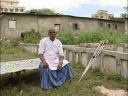
Summary: At Antop Hill, Bombay one will find the burial grounds of Chinese, Iranian, Jews, Hindus and Muslims. Predominantly Chinese, the cemeteries date back to 1890 according to the caretaker of the Chinese cemeteries, Mohammed Rafi, an old Muslim man. The Chinese came to Bombay in the early 1800s with the East India Company for silk trade. Bombay’s 1826 census shows evidence of a total of 37 Chinese families, mostly residing in Girgaum. Today the population of Chinese in Bombay is limited to tourists and the Chinese people that were born and brought up here. This Antop Hill land, which was back then an isolated, uninhabited area, was selected as burial grounds in the 1880s. Buried in these grounds is the history of our own country that is uniquely intertwined with the history of others. Madhusree Dutta (M) conducted an interview here with Mohammed Rafi (MR). Shot by: Avijit Mukul Kishore

Camera pans from a little boy, sitting nonchalantly on a tombstone to a house with cracked walls. A pair of legs swing in and out of the window. Camera pans back to the tombstones, but the boy is now gone. We see the tombstones surrounded by overgrown plants.
Sound of airplane.
boy
butterfly
cracks
house
legs
neighbourhood
plane
plants
settlement
swing
tombstone
window
yellow
Chinese cemetery, Antop Hill, Mumbai
antop hill
burial grounds
cemetery
chinese
chinese cemetery
immigration
madrasi settlement
migrants
trade
weed

A Tamil (Madrasi is the generic term in pedestrian language) woman looks out of her window. Camera zooms out to reveal that she doesn't live in just any neighbourhood, but outside her window lies the graves of many Chinese people. The woman is now joined by a younger boy at the window. We now see the details engraved on one of the tombstones "Mr. Yang Tong Che", a Chinese man's mortal remains resting among Tamil migrants!
China
grave
identity
inhabitants
irony
madrasi
name
neighbourhood
tombs
view
yang tong che

A view of the dilapidated tombs on either side of the tracking camera. The Chinese prefer to bury their dead in a hilly area according to Feng Shui, how ironic that they are buried here in the dust and grime of Antop Hill, which inspite of its name is hardly a hilly area.
antop hill
bury
decaying
feng shui
hill
old
tombstones

Camera pans back and forth to show the Chinese tombs that sit among the discarded groundlings. The neighbouring slum houses of Tamil/Madrasi households stand tall in the background. And even further back, we see shiny, new apartment buildings. The running history of a metropolis - old tomb stone of foreign nationals, newer migrants and occupants and the vertically rising global city!
buildings
cemetery
chinese
houses
madrasi
plants
settlement
tombs
unkempt

The blackening tombs rest among the decaying foliage. A truck passes in the background. The dullness of this rainy, Bombay afternoon only adds to the darkness of this scene.
afternoon
cemetery
chinese
dark
foliage
mumbai
palm tree
rain
tombs
truck

Camera tracks back and forth, showing the profile of the Chinese tombs. Name of the deceased, date of death - alien yet familiar!
burial
chinese
tombs

These tombs almost look like entrances to toy houses from the front.
bombay
cemetery
chinese
entrance
houses
plants
tomb

China
The Chinese tombs and a long shot of the unkempt burial area. Did the high population of China have something to do with their choice of burial ritual? Burial of the bones only, in order to save space?
ashes
burial
chinese
cremation
dead
population
rituals
space
unkempt

In memory of the mother - the tombstone of Mrs. Hsuing Shung Ling, another tombstone of Mr. Tung Heng Hsiu who was born in 1918. I wonder what brought them to Bombay and what their stories must have been. Another tombstone of Mrs. Sabeena Suleman Mushna. Who was she? Does her name indicate to a plural identity? Overlapping of religion or region? Or is it an ordinary phenomena?
1918
China
burial
chinese
cremation
foreign ground
idenitity
muslim
name
peace
rest
soul
tombs

Camera pans from the tombstones to the empty, unkempt land and trees. It is melancholic but somehow not sad.
cemetery
chinese
graveyard
ground
tombstone
trees

China
Even though, the tombstones show dates as recent as 2004, the cemetery by itself has not been maintained at all. The Chinese community in Bombay cannot be called invisible. There are quite a few families living in India for a century or more. Main occupations of the community are restaurants, laundry, dentistry, leather goods and hair styling.
burial
cemetery
cremation
dates
death
expiry
family
foreign
identity
land
names
peace
people
rest
rituals
soul
tombstones

Camera pans from thehumble living quarters to theoverwhelming Indian Oil structure to the small tombs of the Chinese cemetery. How long will it be until these graves are broken down and skyscrapers built on top of them? The space hungry city breaths down the dead.
China
chinese cemetery
indian oil
quarters
skyscrapers
space

Graying, decaying, cracking, Chinese tombstones. Is it something to do with the foreigner status of the community? Or is it just a case of urban amnesia?
China
chinese
death
foreign
land
tombstones

China
Iran
Mohammed Rafi, a Muslim mogrant from UP has been the caretaker of the Chinese cemetery for three generations. The colonial British people used to live within the Fort (the area is still known by the same name) compound which was known as European quaters. The native locals used to live around the bazaars (Bhendi bazaar, Null bazaar, Chira bazaar etc.) outside the fort. During the plague epidemic in early 20th century the authority marked the Antop hill area for burial ground for various communities, both Europeans and natives.
Mumbai
(M): Your name is Mohammed Rafi?
(MR):Yes.
(M): Mohammed Rafiji, my name is Madhu, we are making a documentary on Mumbai graveyards and cemeteries, how many kinds of people came here and settled here. We do not have much information on this, please give us some information on this…
(MR): I have been here for more than fifty years. My father was here before that…and our third generation is also now working in this cemetery.
(M): So how do you like it here, they rituals here are different from yours…there is Chinese…
(MR): Yes the Chinese have different rituals, there is an Iranian cemetery here, which has different rituals, cemetery, Muslim, Hindu…the entire area is of these different cemeteries.
caretaker
cemeteries
chinese
graveyards
hindu
iranian
mohammed rafi
muslim
rituals
settlement
traditions

China
The cemeteries in this area date back to 1890. This land had been specified for these cemeteries, as at that time Antop Hill was an isolated, uninhabited area, even used for military purposes. According to Mohd. Rafi, the caretaker of the cemetery, among the Chinese population - only those who were born here have stayed on, leaving the population of Chinese in Bombay to a comparatively small number of 3000.
(M): How did that happen Rafisaab, why are there so many cemeteries in this area?
(MR): They are not of today, the cemeteries here are very old, from 1890. Back in the day, this place was hardly populated, people were scared to even walk around this area, but now there are a lot of buildings here and the area is populated. Where the Indian Oil stands now, used to be inhabited by the Military earlier, therefore now the population here has also increased. The population of Chinese people here has decreased a lot.
(M): what happened? Did they leave or the population just decreased…
(MR): They left and the population decreased. The Chinese that were born here have stayed, the tourists of course, don't end up living here, they visit and then leave…
1890
chinese
indian oil
isolated
military
population
tourists

For Mohammed Rafi the job with monthly salary of Rs. 300 is a family occupation. He is so comfortable here that he expects his children also to take up the same profession, not realizing that soon there may not be any cemetery to take care of. The ritual entails transfer of the bones of the dead body from another cemetery to the one we are standing at. This explains the small size of the tombs.
(M): How did your family start doing this? I'm sure your father must have told you about it sometime.
(MR): Well, we used to live here Sheikh Misri.
(M): Where? Where did you live?
(MR): Sheikh Misri Darga. Our home was there. It was there when a man offered us this job with occupancy. Now our family was a little big, so we agreed. At that time, they would pay us Rs. 25 per month and now our salary is Rs. 300 per month.
(M): What does your job entail? Of course, looking after this place…but who carries out the rituals?
(MR): Rituals, well when they get the body they take it to the other cemetery and after five years they transfer it here. We have to take permission from the BMC each time, for every body and after that we wash the bones in spirit. And after washing them, we put it in a big pot, and then make it like this.
(M): You must have had to learn all this.
(MR): Our forefathers had been doing this so we stayed with them and learned. And now we tell us kids.
(M): Yes because the rituals in your religion must be different and it is different with them.
(MR): It is different here…
(M): SO how does it feel?
(MR): Well our lives have been spent here so we live it here itself. If we go to some new place, we don't like it here.
Sheikh Misri Darga
bmc
bones
family
forefathers
job
religion
rituals
rs. 300
sheikh misri darga
spirit

Rafiji insists that a good man, a man that provides service to humanity stays away from any trouble or bad spirits. In short, he does not provide any anecdotes that Madhusree was hoping for.
(M): So is there any special thing that you remember, from when you were young or working that you may still remember?
(MR): There are not many incidents like this that have happened to me. We have not been through any such incidents because we don't harm any dead person that anything will happen to us.
(M): No no, I am not talking about ghosts. I am talking about people, have you met anyone who you have remembered or any such incident that may have occurred even in someone else's life that you may remember. A reason why you believe that your work is different form that of others.
It is very important.
(MR): Yes not everyone can do this.
(M): That's why please tell us some of your experiences.
(MR): Well, not everyone can do this and thanks to the one above, there have been no such incidents that have occurred with us. We perform seva (service) so there is no question of anything happening to us. Neither did anything happen to our forefathers, with us and neither will our sons go through anything.
dead
ghosts
god
god's grace
harm
humanity
incidents
memory
service
seva
young

Mohd. Rafi explains the border lines of the various cemeteries.
(M): Ok so Rafisaab, there used to be some other cemeteries here also right? I mean this is the Chinese cemetery…
(MR): This is Chinese, that is also Chinese. Chinese have four flats (plots?). One is also next to the Indian Oil. So in return of one flat, they have given us this flat. This wall that you see, there was another wall and the flat on the other side has been given to us. Because we did not get one flat, that flat has been given to us.
(M): In this corner, there is also a Jew cemetery here? I have heard, there was one at some point.
(MR): There was. Earlier. The wall that you see here, it was on the other side of that wall and that small cemetery is of the Chinese.
China
cemetery
chinese
indian oil
jew
walls

(M): Yes, let me just understand it. Where we are seated, what is that?
(MR): This is Chinese.
(M): Then. The adjoining one?
(MR): The adjoining one was not here first, earlier there was a wall. The bathroom that you see there, from that bathroom there was a wall. And next to that, next to this cemetery there was a small cemetery, which belonged to the Chinese.
(M): Yes, so where was the Jew cemetery?
(MR): Their cemetery was full so they shut it down.
(M): Where was that?
(MR): It was here, where you see that tree there. From this tree to that one, that was the cemetery.
(M): So this comes under the Chinese cemetery itself?
(MR): Yes this is the Chinese cemetery.
(M): Do you know what Jews they were? Were the Baghdadi Jews or Marathi speaking Jews?
(MR): No, I have no idea.
(M): Ok, you don't know, I will have to ask someone else.
The Jewish cemetery had been shut down as it was full. Like the living people the dead in a metropolis too move, migrate, get displaced, overlaid. For the history of Jewish community in Bombay check the event: Arrivals & Departures: Jewish community in this site.
baghdadi
bathroom
burial
cemetery
chinese
jewish
language
marathi
walls

Mohd. Rafi remembers how the discarded cemetery had been occupied overnight by the homeless people. Though the settlers are from his own class and nationality and he had no particular reason to feel any afinity with the dead Europeans, the contempt in his voice is unmistakable. Is it only about the sanctity of a cemetery? Or a simple colonial hangover? A familiar contempt towards one's own class? Or a hostility based on cultural and regional differences? Mohd. Rafi talks about a cemetry for the European people. He must have used the word European as a generic term of white people.
Mohd. Rafi talks about a cemetry for the European people. He must have used the word European as a generic term of white people.
Europe
church
european cemetery
graves
land
race
skin
white
(M): What was that?
(MR): This is the European cemetery.
(M): What do you mean by European cemetery?
(MR): This was also a burial ground. This also got full.
(M): So it was for white people?
(MR): Yes white people.
(M): Do you remember that or was this before your time?
(MR): Well when we came it was already full, completely covered with graves. There was no place. This one and there is one by the Church, two cemeteries were there here.

Bombay, the ever-growing city. Houses are being built over graves! And ofcourse graves get overlaid on settlements - all the time - in the name of development.
Europe
Madras, Bombay, Dinia
breakdown
european
graves
land
(M): So how did this get made (referring to the houses).
(MR): They settled here in one night.
(M): How!
(MR): Madrasis. They broke everything, cleaned it and settled here.
(M): Did you see that? I mean were you here at that time?
(MR): Yes.
(M): I mean, do you remember it? Did it happen recently?
(MR): Yes, I remember very clearly.
(M): How? When did this happen?
(MR): I think it happened about 35-36 years ago.
(M): How did it happen? Tell us a little…
(MR): All these Madrasis lived at 4th no gate and when municipality broke their houses down, they settled down here in one night.
(M): So they took the graves out and settled here?
(MR): Yes. There are still signs of graves. There are black stones and names etc. written.
(M): So the European people didn't say anything?
(MR): Nothing, there has not been a single objection till today.
(M): Ok Rafisaab, thank you.
madrasis
objection
property
settlement
space
Pad.ma requires JavaScript.
